
Table of Contents
- Why Senior Dogs Need Orthopedic Beds
- Best Dog Bed for Arthritis: What to Look For
- Orthopedic Dog Beds for Large Dogs: Sizing and Support
- Memory Foam Dog Bed for Senior Dogs: What Sets Them Apart
- Washable Dog Beds with Removable Covers: Easy Care for Accidents
- Bed Styles for Senior Dogs: Bolster, Flat, and Lounge
- How to Choose the Right Orthopedic Bed Size for Your Senior Dog
- Frequently Asked Questions
Last Updated: October 5, 2026
Why Senior Dogs Need Orthopedic Beds
Aging changes how a dog sleeps. Joints stiffen, muscles lose tone, and pressure points that were fine at age three cause real discomfort by age nine or ten.
Owners tell us the same thing: the dog still wants the couch and the long walk, but wakes up stiff and slow.
An orthopedic dog bed is a bed built with dense, supportive foam designed to distribute a dog’s weight evenly and reduce pressure on hips, elbows, and spine. The goal is simple: fewer sore mornings.
Below, we break down what matters when you shop: foam density, bed height, and washable covers.
The single biggest factor in a senior dog bed is foam quality, not fabric or color. A thick, high-density base outlasts a plush cover every time.
Best Dog Bed for Arthritis: What to Look For
The best dog bed for arthritis keeps weight off inflamed joints and is easy to get on and off: firm, high-density foam, a low entry point, and a surface that does not collapse under pressure points.
Arthritis shows up as stiffness after rest, reluctance to climb stairs, and slower rising. A soft, pillowy bed feels cozy but offers almost no joint support, letting hips and elbows sink against the floor.
What to prioritize instead:
- Firm foam that holds its shape under the dog’s full weight
- A bed low enough to step into without a hop
- A surface that stays cool, since inflamed joints often run warm
Accessibility for Dogs With Limited Mobility
Step-in height. Measure from the floor to the top of the sleeping surface, not the bolster.
Edge firmness. The perimeter should support a leaning dog without becoming a wall.
Traction. A senior dog pushing up from lying needs the surface to grip its paws.
Repositioning ease. Watch how your dog shifts from lying to standing. A dog that pushes up with its front legs needs a surface that does not slide.
If your dog has weak hind legs, place the bed against a wall or low furniture so the dog can lean while stepping on. It removes the wobble that makes some dogs give up on a new bed.
Matching the Bed to the Arthritis Pattern
Not every arthritic dog has the same limitations; match the bed to the pattern you see.
- Stiff after rest, fine once moving: prioritize pressure relief. A 4-inch-plus high-density foam base with a memory foam comfort layer keeps hips and elbows from bottoming out during long naps.
- Slow to rise, wobbly in the hind end: prioritize accessibility. A flat or low lounge bed with a 3-to-5-inch step-in height and a nonskid bottom matters more than extra foam thickness.
- Reluctant to lie down at all: prioritize familiarity and scent. A bed that smells like the dog’s old sleeping spot, placed in the same location, is more likely to be accepted than a new bed in a new room.
A veterinarian or canine rehab professional can help identify which pattern your dog fits. A bed supports comfort; it does not treat arthritis. If stiffness is worsening, talk to your vet, not a product page.
Orthopedic Dog Beds for Large Dogs: Sizing and Support
For large dogs, sizing is where most purchases go wrong. A bed that looks generous online can arrive too small for a sprawler, forcing it to curl tightly and concentrating pressure exactly where arthritis hurts most.
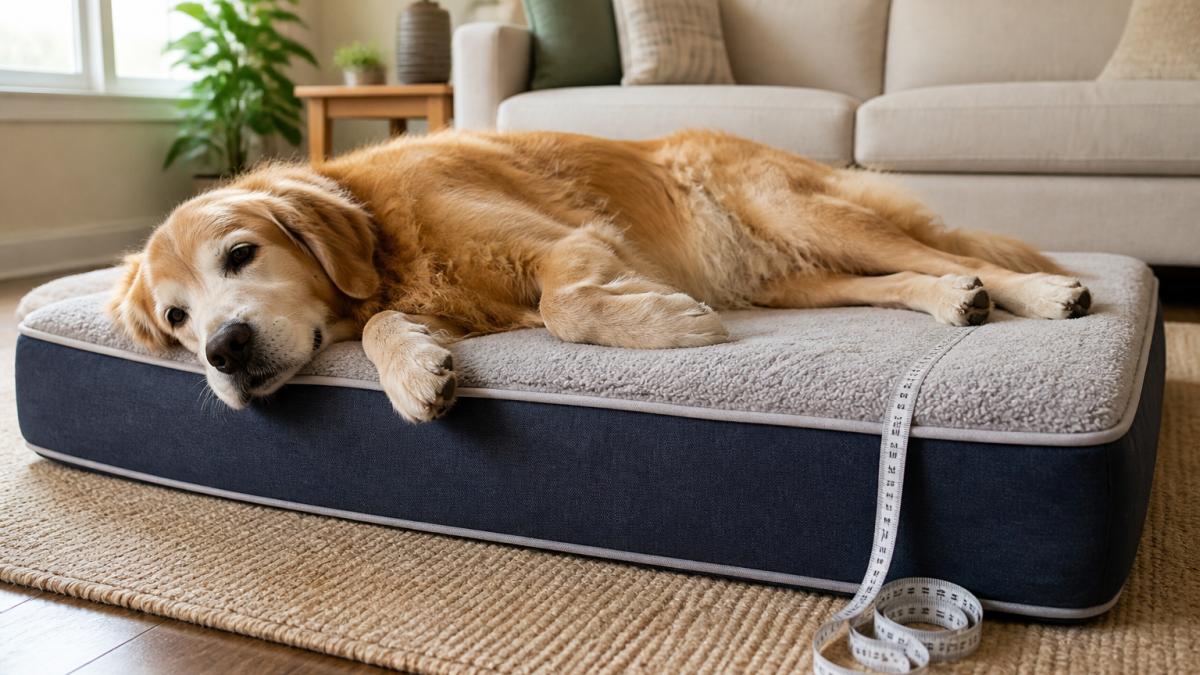
Measure your dog while asleep, not standing. Then add roughly 6 to 8 inches of buffer so the dog can stretch without hanging off the edge.
Weight Capacity and Bed Dimensions
Weight capacity matters as much as dimensions. A bed rated for a 50-pound dog will flatten under an 80-pound dog within weeks. Check the stated capacity against your dog’s weight and add margin, since a dog with limited mobility rests in one spot for hours.
| Dog Size | Typical Weight | Minimum Bed Length | Best Foam Thickness |
|---|---|---|---|
| Small | Under 25 lb | 24-30 in | 2-3 in |
| Medium | 25-60 lb | 30-36 in | 3-4 in |
| Large | 60-90 lb | 36-44 in | 4-5 in |
| Extra large | Over 90 lb | 44-54 in | 5-6 in |
These are starting points, not rules. A dog that sleeps stretched out needs the longer end of each range.
Memory Foam Dog Bed for Senior Dogs: What Sets Them Apart
A memory foam dog bed for senior dogs differs from a standard bed in three ways: foam thickness, foam density, and shape retention.
Thickness is the easiest spec to judge. A 2-inch pad is a topper, not an orthopedic bed.
Density is harder to verify. Foam density is measured in pounds per cubic foot; higher numbers mean firmer, longer-lasting support.
Beware of beds described only as “extra plush” or “ultra soft.” Soft filling compresses flat under a senior dog’s weight, leaving hips and elbows pressing against the floor, the opposite of what arthritic joints need.
How to Evaluate Foam Without Trusting the Label
“Orthopedic” is a marketing term, not a regulated standard, so verification falls on you.
The press-and-release test. Press your palm firmly into the center and hold for five seconds, then release.
The edge-sit test. Sit or kneel on the edge for a full minute.
The hand-under test. Lie the bed flat and slide your hand under the center while pressing down from above.
Memory Foam vs. High-Density Foam vs. Egg-Crate
These three materials get used interchangeably in marketing but behave very differently under a senior dog.
- Memory foam softens with body heat and molds to the dog’s shape, spreading weight across a wider area. It is excellent for pressure relief but can sleep warm, because it traps heat. Dogs that run hot or have thick coats may prefer a memory foam layer topped with a breathable cover.
- High-density foam stays firm and resists bottoming out. It does not mold to the body, but it holds its shape far longer than low-density foam and provides the structural base that keeps hips and elbows off the floor.
- Egg-crate foam is the convoluted, bumpy foam often sold as a cheap topper. It offers minimal support and flattens quickly under a large dog. It is not an orthopedic material, regardless of how it is marketed.
The best beds for senior dogs typically combine a high-density support base with a thinner memory foam comfort layer on top. That pairing gives you structure plus pressure relief, rather than one at the expense of the other.
Material Safety, Heat, and Odor
New foam off-gasses, which is why a new bed often has a chemical smell. Most odors fade within a few days in a ventilated room.
Heat retention is a real trade-off with memory foam. Senior dogs with arthritis often run warm around inflamed joints, and a dog that overheats will avoid the bed.
For dogs that chew, foam is a hazard. Ingested foam can cause a blockage (Homemade Slime Toxic To Pets).
Cleaning Foam Safely
Foam should not go in a washing machine. Agitation breaks down the cell structure and shortens the bed’s life. To clean foam:
- Remove the cover and wash it according to the care tag.
- Vacuum the foam surface with a brush attachment to lift hair and dander.
- Spot-clean stains with a damp cloth and a mild, pet-safe detergent. Do not soak the foam.
- Let the foam air-dry completely, standing on its edge in a ventilated area, before putting the cover back on. Damp foam grows odor and mildew.
When to Replace the Foam
Foam loses support over time, and a bed that helped two years ago may now be flattened in the dog’s favorite spot. Press the center with your palm: if the foam no longer springs back, or you can feel the floor through it, the support is gone. Replacing the insert or the whole bed restores the pressure relief the dog needs.
Washable Dog Beds with Removable Covers: Easy Care for Accidents
Washable dog beds with removable covers are close to essential for senior dogs. Older dogs are more prone to accidents, and a bed that cannot be cleaned quickly becomes one the dog avoids.
Look for a cover that unzips fully and comes off without removing the foam insert. A hidden zipper beats exposed hardware a dog can chew, and machine-washable fabric that survives repeated cycles matters more than thread count.
Waterproof Liners and Odor Control
A waterproof or water-resistant liner sits between the cover and the foam and saves the bed when an accident happens. Without it, moisture soaks into the foam, and damp foam develops odor no surface washing removes.
For dogs managing incontinence, a waterproof liner plus two spare covers is a practical setup. One cover on the bed, one in the wash, one ready to go.
Bed Styles for Senior Dogs: Bolster, Flat, and Lounge
Bed style should match how your dog actually sleeps. Watch them for a few nights before you buy.
- Bolster beds have raised edges that support the head and neck. Best for dogs that like to curl up or rest their chin on a rim. A low bolster works better than a tall one for dogs with limited mobility.
- Flat beds offer an open, even surface with no edges to climb over. Best for dogs that sprawl, and easiest for a dog with weak hind legs to step onto.
- Lounge beds sit between the two: a flat sleeping area with a low bumper. Good for dogs that sometimes sprawl and sometimes curl.
For a dog with limited mobility, a flat or low-profile lounge bed is usually safer. A tall bolster becomes an obstacle to step over, and a dog that struggles to get onto the bed will simply sleep on the floor.
How to Choose the Right Orthopedic Bed Size for Your Senior Dog
Choosing the right size comes down to measuring your dog’s sleeping position, not standing height.
Run through this checklist before you buy:
- Measure nose-to-tail length while the dog is asleep
- Measure width across the shoulders
- Add 6-8 inches to the length for a sprawler
One more consideration: replacement timing. If the foam no longer springs back when you press it, replace the insert or the bed.
That covers the specs. If you would rather skip the guesswork, our curated selection at Paw Pro Source focuses on supportive foam, washable covers, and low-entry designs built for older dogs.
A senior dog’s comfort changes as joints stiffen and mobility shifts, and the right bed is one of the simplest ways to keep those days easier. Paw Pro Source carries a curated range of pet essentials chosen for comfort and everyday practicality, from supportive bedding to products that simplify daily care. Explore the collection at Paw Pro Source and find the setup that fits your companion.
Frequently Asked Questions
What type of dog bed is best for a senior dog with arthritis?
A memory foam orthopedic bed with high-density support is best for arthritis. It distributes weight evenly, reducing pressure on joints. Look for a bed at least 4 inches thick for large dogs, with a removable, washable cover. Bolster beds can help with getting in and out by providing a headrest and support. According to veterinary rehabilitation professionals, beds that keep joints neutral and avoid sagging are ideal for arthritic dogs.
How thick should an orthopedic dog bed be?
For senior dogs, aim for at least 3 to 4 inches of high-density memory foam. Large breeds may need 5 to 6 inches to prevent bottoming out. Thickness matters because it determines whether the bed supports your dog’s weight without flattening. A good test: press your hand into the bed; it should spring back slowly and not leave a deep impression. Thinner beds may not provide enough pressure relief for arthritic joints.
Do senior dogs need a different kind of bed?
Yes, senior dogs benefit from beds designed for joint support and easy access. Orthopedic beds with memory foam reduce pressure on hips and elbows. Low-profile or bolster beds with a cut-out help dogs with limited mobility get in and out. Washable covers are important for accidents. Also, consider a bed with a waterproof liner if your dog has incontinence. These features make a noticeable difference in comfort and hygiene.
How do I choose the right bed size for my older dog?
Measure your dog from nose to tail and add 6 to 12 inches. For dogs who sleep curled up, a bed slightly larger than their curled size works. For sprawlers, choose a bed that accommodates their full length. Weight capacity is key: ensure the bed supports your dog’s weight without flattening. If your dog has mobility issues, a lower bed height (under 6 inches) makes it easier to step into. Always check the bed dimensions before buying.



0 Comments