Table of Contents
- Premium vs. Budget Pet Products: What the Price Gap Actually Buys
- Are Premium Dog Foods Better? Reading the Label Before You Pay More
- Durable Pet Beds: When the Higher Price Tag Pays Off
- Interactive Pet Toys: Enrichment That Lasts More Than a Week
- How to Judge Premium Pet Products Beyond the Label
- When Premium Pet Products Are Not Worth the Extra Cost
- Conclusion: A Decision Framework for Your Pet and Budget
- Frequently Asked Questions
Last Updated: October 6, 2026
Premium vs. Budget Pet Products: What the Price Gap Actually Buys
Walk down any pet store aisle and you will see two bags of dog food, similar size and packaging, with a price difference that can double or triple the cost. So are premium pet products worth buying?
What the price gap usually buys comes down to four things: ingredient quality, company transparency, product longevity, and fit for your individual pet. It does not automatically buy better health.
Premium pet products are a growing slice of consumer purchasing as pet parents increasingly treat animals like family. But spending more only pays off when the extra cost maps to something you can verify.
Are Premium Dog Foods Better? Reading the Label Before You Pay More
Premium dog food is not automatically better than a standard formula. The difference shows up in the ingredient label, not the price tag: a higher price can reflect real quality, or packaging and branding.
Ingredient Quality and Transparency: What to Look For
Start with the ingredient label. Look for a named protein first, such as chicken, salmon, or beef, rather than a vague “meat meal.” Check for artificial additives, and note where fats come from: some budget formulas rely on seed oils while premium lines use named animal fats.
Transparency is the second signal. A brand that publishes where its ingredients come from gives you something to check; one that leans on “natural” without specifics does not.
- Named protein as the first ingredient
- No artificial additives or colors
- A stated source for fats and oils
How to Evaluate Health Claims Without Getting Fooled
Health claims deserve skepticism, because the gap between what a label implies and what has been demonstrated is often wide.
Ask three questions of any claim. Is the benefit tied to a specific nutrient at a specific level?
That last question is the one most buyers skip. A food supporting healthy skin and a shiny coat is doing what any adequate diet should.
The most common mistake is buying premium food for a health claim while ignoring your pet’s actual response. If coat condition, energy levels, or digestion do not improve within a few weeks, the extra cost is not buying you anything. Switch based on results, not promises.
Durable Pet Beds: When the Higher Price Tag Pays Off
A durable pet bed earns its price when it survives repeated washing, holds its shape, and your pet actually uses it. That last point is where cost-per-day math becomes useful.
The Cost-Per-Day Method, Worked Out
Sticker price tells you almost nothing. Divide the price by the days you realistically expect the bed to last, then compare.
A budget bed priced around $30 that flattens in about six months works out to roughly 17 cents per day.
The math flips when a pet ignores the bed. A $120 bed your dog never sleeps in costs more per use than a $30 bed they use daily, because the denominator is near zero.
What Actually Makes a Bed Last
Durability comes from construction, not the word “premium” on the tag. Four things are worth checking:
- Cover construction. A removable, machine-washable cover with a hidden zipper outlasts a sewn-shut cover, because you can clean it instead of replacing the whole bed.
- Fill type and density. Look for a named fill, memory foam, shredded memory foam, or a specified foam density, rather than “premium foam” or “soft filling.” Memory foam holds shape under a heavy dog; loose fiberfill compresses and clumps.
- Waterproof liner. A waterproof inner liner between the cover and the foam protects the fill from moisture and odor, the most common reason beds get thrown out early.
Sizing: The Check That Prevents Most Returns
Fit is where premium beds fail most often. Measure your pet while they are asleep and sprawled, not standing. A bed sized to a standing animal is usually too small, and a too-small bed gets avoided regardless of how well it is made.
For dogs, add several inches to their nose-to-tail length so they can stretch out. For cats, the same logic applies to furniture: a scratching post that shreds in a month is not a bargain, and a sturdy cat tree with replaceable scratching surfaces is worth more than its sticker price suggests.
When the Higher Price Tag Does Not Pay Off
Skip the premium bed when your pet has already rejected the shape, size, or texture you have tried, a fourth attempt at a higher price rarely changes the outcome. Skip it for occasional use, like a travel crate pad, where washability matters more than foam integrity.
The practical rule: pay more where the bed touches your pet’s comfort and daily sleep, and stay standard where it does not.
Measure your pet while they are asleep, not standing. Dogs and cats sprawl when relaxed, and a bed sized to a standing animal is usually too small. This one check prevents most premium bed returns.
Interactive Pet Toys: Enrichment That Lasts More Than a Week
Interactive pet toys justify a premium price when they survive real play and keep your pet engaged past the novelty phase. Most cheap toys fail on both counts.
The pattern is predictable: a plush squeaker loses appeal in days, a puzzle feeder breaks under determined chewing, a wand toy’s flimsy string snaps on the first hard tug.
Premium toys hold up because of materials and construction, not clever marketing. Look for reinforced stitching, replaceable parts, and adjustable difficulty.
Enrichment also matters beyond boredom.
| Product Type | What Premium Adds | When It Pays Off | When It Does Not |
|---|---|---|---|
| Dog food | Named proteins, transparency, specialized nutrition | Pet has specific dietary needs | Pet thrives on a standard complete diet |
| Pet beds | Washable covers, shape retention, better filling | Large or heavy pets, daily use | Pet ignores the bed regardless of price |
| Interactive toys | Reinforced build, adjustable difficulty | Strong chewers, high-energy pets | Gentle players who lose interest quickly |
| Cat furniture | Stable construction, replaceable scratching surfaces | Multiple cats, daily scratching | Small space, single sedentary cat |
How to Judge Premium Pet Products Beyond the Label
Judging a premium product means looking past the label and asking what the extra money changes in daily use.
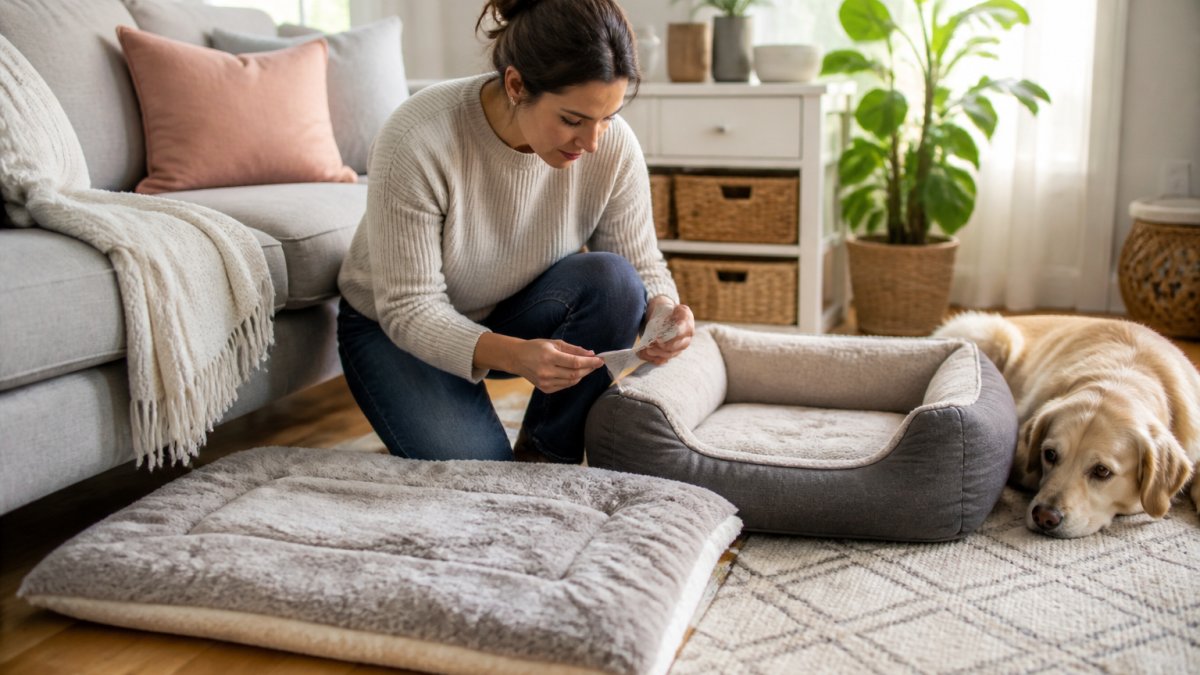
Four checks separate real quality from a premium label. Look at materials and construction, since stitching, hardware, and filling are visible.
Pet suitability is where most purchases succeed or fail. A premium product built for a large, active dog is a poor match for a small senior cat, no matter how well it is made.
Safety, Recalls, and Independent Quality Verification
Safety is the one area where you should never take a premium label at face value. In the United States, pet food and many pet products fall under the oversight of the FDA’s pet food and product safety guidance, which publishes recall notices and safety information.
Independent verification adds another layer: certifications and third-party testing give you a claim someone outside the company has checked. Where a product carries no verification and no clear safety information, treat the premium price as unproven.
When Premium Pet Products Are Not Worth the Extra Cost
Premium pet products are not worth the extra cost when the benefit does not reach your pet. That happens more often than the marketing suggests, and a simple decision method makes it easier to spot before you spend.
A Three-Question Test Before You Upgrade
Run any premium product through these three questions:
- Can I name the specific outcome the extra money improves? If the answer is “better quality” or “healthier,” that is a category, not an outcome. A named outcome looks like “less scratching,” “fewer hot spots,” “easier on a sensitive stomach,” or “sleeps through the night without stiffness.”
- Is that outcome something I can observe within a reasonable window? Coat, skin, digestion, energy, and sleep quality are observable. Vague longevity claims are not.
- Would a standard complete product plausibly deliver the same outcome? If yes, the premium tier is buying you packaging, not results.
If you cannot answer all three, buy the standard option first and upgrade only if it falls short.
Category-by-Category: Where the Extra Spend Usually Pays Off
Premium pricing has spread well beyond food. Some categories reward the extra spend and some do not.
Usually worth it:
- Therapeutic and specialty diets for a diagnosed issue, a prescription or limited-ingredient formula targeting a confirmed allergy or condition is doing something a standard diet is not.
- Orthopedic beds for aging or large-breed pets with joint stiffness, where foam density and support change how well they sleep.
- Safety-critical gear, a harness, crate, or car restraint that is crash-tested or load-rated is worth more than an untested equivalent, because the failure mode is injury.
Usually not worth it:
- Standard complete diets for a healthy pet with no skin, coat, or digestive issues, a complete-and-balanced formula at any price tier meets the same nutritional standard.
- Leashes, collars, and bowls where the premium version adds branding rather than function.
- Toys for gentle players who lose interest before the toy wears out, durability is irrelevant if the toy is abandoned in a week.
The Budget Reality
Budget constraints are a legitimate reason to stay standard, and they do not make you a worse pet owner. If money is tight, prioritize categories where the extra spend changes a health or safety outcome, a therapeutic diet, a crash-tested harness, an orthopedic bed for a stiff senior, and stay standard everywhere else. A healthy pet on a complete budget diet is better off than one on a premium diet that stretches the household budget thin.
The Reframe
The question is not “premium or budget.” It is “does the extra money change an outcome I can see for this specific pet.” When it does, the premium tier earns its price. When it does not, the standard option is the smarter buy.
Premium pricing is only justified when it changes an outcome you can observe. If you cannot name what the extra money improves for your specific pet, buy the standard option and put the savings toward something that shows a result.
Conclusion: A Decision Framework for Your Pet and Budget
Use this framework before your next purchase. Start with your pet’s actual needs, not the product tier. If your pet has a specific issue with skin, coat, digestion, or mobility, look at premium options and verify the ingredients and claims behind them.
Then compare cost per day of use rather than sticker price, check safety and recall records at the source, and match the product to your pet’s size, age, and habits. That sequence answers the premium question without guesswork.
Frequently Asked Questions
Are premium dog foods really better than standard options?
It depends on the specific product. Premium dog foods often use higher-quality proteins and fewer artificial additives, which can support coat condition, skin health, and digestion. But the premium label alone does not guarantee better nutrition. Read the ingredient label, check for a complete nutritional profile, and compare cost per pound against what your dog actually needs at its life stage.
Are expensive pet beds worth the money?
Durable pet beds made with thicker foam and machine-washable covers often outlast budget alternatives by years, which lowers the cost per year of use. The math changes if your pet ignores the bed or destroys it quickly. Look for a bed with a removable, washable cover and a supportive fill that matches your pet’s size and sleeping style before paying a premium.
What should you look for in a high-quality pet product?
Check four things: ingredient or material transparency, safety certifications or recall history, durability relative to how your pet uses the item, and whether replacement parts or covers are available. A premium pet product should make at least two of these clearly better than the budget option. If it only costs more without improving any of them, the price premium is not justified.
When should you replace your pet’s bed or toys?
Replace a pet bed when the fill flattens, the cover tears beyond repair, or it stops supporting your pet’s joints. Interactive pet toys should be replaced once seams split, squeakers detach, or stuffing becomes accessible, since loose pieces are a choking risk. Inspect both monthly, and retire anything with exposed foam or broken hardware.
Choosing well comes down to matching products to your pet, not to a price tier. Paw Pro Source curates premium pet products with that in mind, from cozy beds and heating mats to interactive toys and cat furniture, so you can find items built for comfort and play without sorting through the noise. Our selection focuses on practical products that simplify everyday pet care and keep your pets active and at home. Learn now and find the essentials that fit your pet and your routine.



0 Comments