
Table of Contents
- Why Do Cats Scratch Furniture?
- How to Redirect a Cat to a Scratching Post
- Best Cat Scratching Post for Furniture Scratching
- DIY Couch Protector for Cats
- Cat-Safe Deterrents and Repellent Sprays
- Nail Trimming and Nail Caps for Furniture Protection
- A Step-by-Step Training Plan With Progress Checks
- Step 1: Identify the Scratching Pattern
- Step 2: Set Up the Environment (Week 1)
- Step 3: Reduce the Payoff on Furniture (Week 2)
- Step 4: Shift and Reinforce (Weeks 3-4)
- Step 5: Fade the Training Aids (Weeks 5-6)
- How to Measure Progress
- Multi-Cat Households and Resource Competition
- When to Stop Training and Call Your Vet
- When Scratching Changes Warrant a Vet Visit
- Frequently Asked Questions
Last Updated: October 4, 2026
Why Do Cats Scratch Furniture?
Cats scratch furniture because scratching is normal, necessary behavior, not a personal attack on your sofa. It sheds old claw layers, stretches muscles, and leaves visual and scent marks. Punishment will not stop it, redirection will. When you learn how to stop cats from shredding furniture, the first step is understanding the “why.”
Scent Marking and Territorial Claims
Cats have scent glands between their paw pads, so every scratch leaves a chemical signature. To your cat, that couch corner is a message board. In multi-cat homes, territorial marking increases when resources feel scarce; adding more scratching surfaces reduces the competition.
Claw Maintenance and Stress Relief
Scratching pulls off the dull outer shell of each claw and releases tension. Cats often scratch after waking, after eating, or when anxious. A cat that scratches one spot repeatedly may be stressed, not spiteful.
Scratching is a need, not a bad habit. You cannot train it away. You can only move it to a surface you both approve of.
How to Redirect a Cat to a Scratching Post
Redirecting a cat means making the right surface more appealing than your furniture. The American Society for the Prevention of Cruelty to Animals offers cat scratching behavior guidance that supports this approach. It works, but only if the post matches your cat’s style.
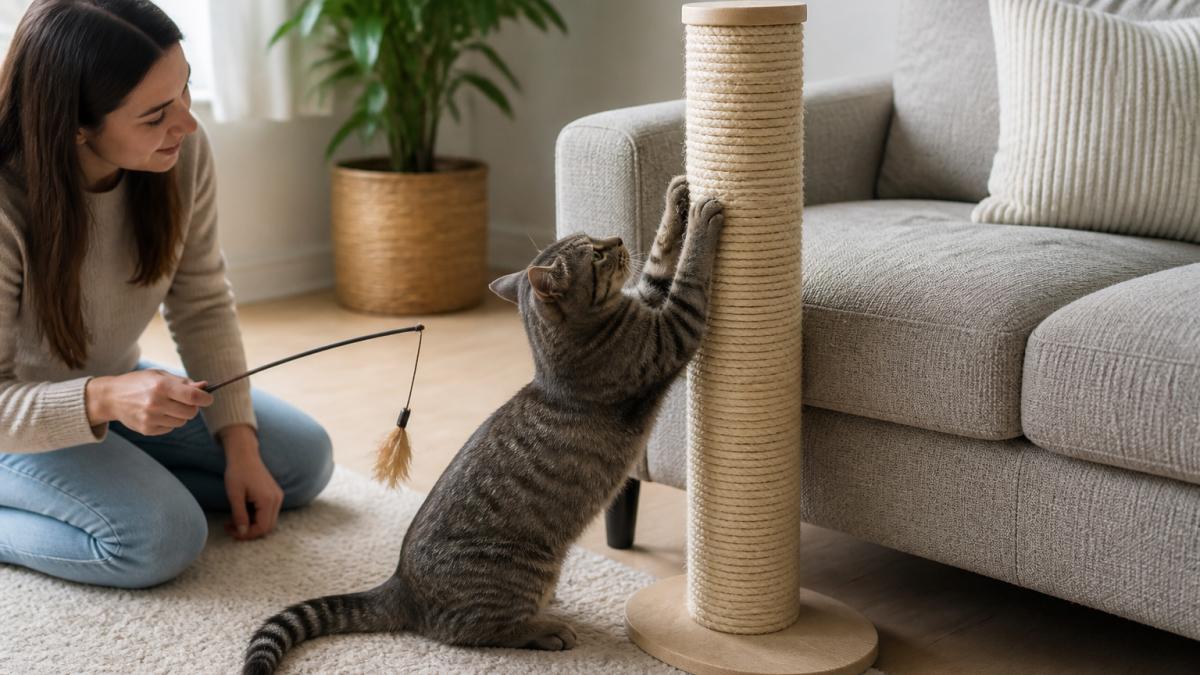
Match the Post to Your Cat’s Scratching Style
Watch how your cat scratches, that tells you what to buy.
- Vertical scratchers reach up and pull down. They need a post at least as tall as they are when fully stretched.
- Horizontal scratchers dig into carpet or rugs. They prefer flat floor pads.
- Some cats do both. Offer one of each and see which gets used.
Placement That Actually Works
Put the new post right next to the damaged furniture. Cats scratch where they already feel secure, and moving the post across the room rarely works. Once your cat uses it consistently, shift it a few inches at a time toward its final spot.
Rub a little catnip or silvervine on the new post. Most cats investigate within minutes, and the sooner they touch it, the sooner the habit forms.
Best Cat Scratching Post for Furniture Scratching
The best scratching post for furniture scratching is the one your cat actually uses, and that comes down to four specs, not brand names: height, stability, orientation, and material. Get those wrong and the post sits untouched while your sofa keeps taking damage.
The Four Specs That Decide Whether a Post Gets Used
Height. A vertical scratcher needs to stretch to full length with its front paws extended overhead.
Stability. A post that rocks, tips, or slides is a post your cat will not trust.
Orientation. Watch your cat scratch for 30 seconds and you will know which one to buy.
Material. The texture must feel like something the cat can sink its claws into and tear.
Texture Comparison: What Holds Up and What Gets Ignored
| Texture | Durability | Cat Appeal | Best For |
|---|---|---|---|
| Sisal rope | High | High | Vertical scratchers |
| Corrugated cardboard | Low | High | Horizontal scratchers, testing preferences |
| Carpet | Medium | Varies | Cats who already scratch rugs |
| Wood | High | Low | Declawed or senior cats |
Sisal rope is the workhorse for most homes: it lasts, and its rough surface mimics tree bark. Cardboard pads are inexpensive and replaceable, ideal for testing preferences before you spend more. Skip carpet-covered posts if your cat already targets carpet, that blurs the line you are trying to draw.
Placement Rules That Beat “Put It Nearby”
Placement is where most redirection attempts fail. A post in the corner of a spare room will not compete with the couch your cat already loves.
- Put the new post directly beside the damaged spot. Cats scratch where they already feel secure.
- Match the height of the damage. If your cat scratches the sofa arm, the post must be at least that tall; a chair-back corner needs a tall post.
- Give every cat its own station. In multi-cat homes, place at least one scratching surface per cat, plus one extra, across the rooms the cats actually use.
What to Skip
- Small, light posts that tip when a cat leans on them.
- Posts wrapped in the same fabric as your sofa, that teaches the cat this texture is fine to scratch.
- Posts with dangling toys glued on that break off and become a choking hazard.
If your cat ignores one post, do not conclude redirection does not work. Change one variable at a time, height, then stability, then texture, then placement, and watch which change gets a reaction.
DIY Couch Protector for Cats
A DIY couch protector for cats works by making the furniture unpleasant to touch, not by scaring the cat: the couch feels wrong, the post feels right.
Double-Sided Tape and Sticky Strips
Press double-sided tape or sticky strips along the scratched edges of your sofa. Cats dislike the tacky feel on their paws. Leave the tape for a few weeks, then remove it once the new post is in rotation.
Plastic Covers and Throw Blankets
Clear plastic furniture covers are ugly but effective for short-term training, and throw blankets work too, especially on box springs and chair backs. Neither is permanent, they buy time while the scratching post becomes the new normal.
Never use tape on leather or delicate upholstery. It can pull the finish or leave residue. Test a hidden spot first.
Cat-Safe Deterrents and Repellent Sprays
Cat-safe repellent sprays use scents cats dislike, like citrus or eucalyptus. Spray them on furniture edges, never on the cat, and always check the label for pet-safe certification.
A few cautions:
- Never use essential oils undiluted. Many are toxic to cats.
- Skip anything with phenols or strong solvents.
- Reapply every few days, since the scent fades.
Pheromone diffusers can also help. They do not repel cats, they calm them, reducing stress-driven scratching.
Nail Trimming and Nail Caps for Furniture Protection
Trimming your cat’s nails every two to three weeks reduces the damage each scratch causes. Ask your vet to show you the technique once, then do it at home. Soft nail caps glue over the claw and blunt the tip; most cats tolerate them once used to them. Neither replaces a scratching post, they lower the cost of a slip-up while training is in progress.
A Step-by-Step Training Plan With Progress Checks
Training a cat to stop shredding furniture is not a single trick, it is a short behavior plan with measurable checkpoints. Most cats show real progress within four to six weeks, but only if you match the intervention to the reason your cat scratches.
Step 1: Identify the Scratching Pattern
Before you buy anything, watch your cat for a few days and note when and where it scratches. The pattern tells you which fix to lead with.
- Territorial marking. Scratching at vertical edges near doorways, windows, or a favorite perch, often in multi-cat homes. Lead with more scratching surfaces and vertical space.
- Stretching and claw maintenance. Scratching right after waking or eating, usually in one or two consistent spots. Lead with a tall, stable post placed exactly where the cat already stretches.
- Play and boredom. Scratching followed by racing, pouncing, or attacking the couch fabric. Lead with scheduled play and a puzzle feeder before adding deterrents.
If you cannot tell which pattern you are seeing, treat it as stretching first, the most common cause and the easiest to redirect.
Step 2: Set Up the Environment (Week 1)
- Place a post or pad directly beside each damaged spot.
- Match the post height to the height of the damage.
- Add one extra scratching surface per cat.
Step 3: Reduce the Payoff on Furniture (Week 2)
- Trim nails. This does not stop scratching, but it lowers the damage per scratch during training.
- Apply double-sided tape or a temporary cover to the worst spots for several weeks.
- Do not punish. Spray bottles, yelling, and startling noises teach the cat to scratch when you are not looking, and they damage the trust redirection needs.
Step 4: Shift and Reinforce (Weeks 3-4)
- Move one post a few inches toward its final spot every few days. Watch whether the cat follows it.
- Add a puzzle feeder or a new toy to reduce boredom-driven scratching.
- Keep rewarding contact with the post, not just absence of scratching. Rewarding what you want is faster than punishing what you do not.
Step 5: Fade the Training Aids (Weeks 5-6)
- Remove covers and tape gradually, one spot at a time, starting with spots the cat has stopped targeting.
- Keep the posts in place permanently. Scratching is a lifelong need, not a phase.
How to Measure Progress
Do not rely on a vague sense that things are better. Track it.
- Count new scratches per week. Check two or three spots on the same day each week; the number should trend down.
- Count post contacts per day. A cat that uses the post several times a day is on track even if it slips once.
- Note the pattern. If scratching moved from the couch to the post, the plan is working. If it moved to a different piece of furniture, placement needs adjusting.
Multi-Cat Households and Resource Competition
In homes with more than one cat, scratching often signals resource competition rather than a furniture problem. The fix is structural.
- Provide more scratching surfaces than you have cats, spread across rooms.
- Place surfaces near windows, beds, and entryways where cats already patrol.
- Give each cat its own feeding, watering, and resting station so scratching is not the only way to claim space.
Multi-cat homes where scratching is tied to territorial marking and resource guarding.
When to Stop Training and Call Your Vet
A behavior plan will not fix a medical cause. Contact your veterinarian if any of the following appear:
- Sudden, intense scratching without a clear trigger.
- Scratching one area until the skin is raw, bleeding, or bald.
- Scratching that increases at night or disrupts sleep.
These can point to allergies, skin conditions, pain, or thyroid issues. A veterinary exam is the right next step, not a failure of training, but ruling out a cause training cannot reach.
When Scratching Changes Warrant a Vet Visit
At Paw Pro Source, we offer a curated selection of cat furniture and enrichment toys designed to make redirection easier. Browse our cat furniture collection and find the setup that fits your space and your cat’s style.
Frequently Asked Questions
How can I make a DIY couch protector to prevent my cat from scratching it?
Try double-sided tape or sticky strips along the corners and arms your cat targets. The sticky feel discourages contact without harm. For a temporary barrier, drape a thick throw blanket or plastic cover over the spot. A tight-fitting slipcover also works well. Keep the protector on for at least three to four weeks while your cat learns to use a scratching post placed right next to the couch.
Why do cats shred furniture?
Cats scratch furniture for claw maintenance, scent marking, and stress relief. Scratching removes dead claw sheaths and stretches muscles. The scent glands in their paws leave a territorial message. When a cat feels bored, anxious, or has no appropriate scratching surface, upholstery becomes the target. Understanding which reason drives your cat’s behavior helps you pick the right solution, whether that is a new scratching post or more enrichment.
Do plastic sticky strips stop cats from scratching furniture?
Sticky strips work as a short-term deterrent because cats dislike the tacky feel on their paws. They are most effective on flat surfaces like sofa arms and box springs. However, sticky strips alone do not teach your cat where to scratch instead. Pair them with a scratching post placed near the damaged furniture and reward your cat with praise or a treat when it uses the post.
Where should I put a scratching post to keep my cat off the couch?
Place the scratching post directly beside the furniture your cat already scratches. Cats scratch near their resting and social areas, so a post in a back bedroom often goes unused. If your cat scratches the sofa’s left arm, put the post right there. Once your cat uses it consistently, you can move the post a few inches at a time toward a spot that fits your room layout.
Stopping furniture scratching takes the right surface, the right spot, and a few weeks of patience. Paw Pro Source makes that easier with durable scratching posts, engaging enrichment toys, and cozy essentials designed for real homes. Our focus on comfort and play means your cat gets what it needs without wrecking your couch. Learn now and build a setup that works for both of you.



0 Comments